Storing Garden Equipment in Your Shed Over a Dublin Winter
A Practical Approach to Storing Garden Equipment This Winter
Storing garden equipment well over winter means cleaning and drying every tool, preparing petrol and battery machines before they are left idle, keeping items off the floor and away from walls, and checking the shed for leaks and condensation. In Dublin and the surrounding counties, a dry, ventilated and secure shed does most of the work.
This article sets out how to prepare hand tools, lawnmowers and cordless equipment for the months ahead, how to arrange the inside of your shed, which items are better kept in the house, and what to check on the shed itself before the worst of the weather arrives.
Why Winter Is Hard on Garden Tools
Most garden equipment is put away in late October or early November and not touched again until March or April. That is five months or more in which moisture, cold and neglect can do their damage. Met Éireann describes Irish winters as cool and windy, with frequent frontal rain, and that combination of damp air and fluctuating temperatures is what causes most problems in a garden shed.
When warm, moist air meets a cold surface it condenses. Bare metal blades, engine parts and the underside of a roof can all collect droplets on a cold night, and if tools are put away dirty, the soil and grass on them hold that moisture against the steel. The result is rust on spades and shears, seized pivots on secateurs, and stale fuel and corroded contacts in machinery. None of this is dramatic, but it adds up to tools that are harder to use and machines that will not start in spring.
The good news is that a few hours of preparation now, together with a sound shed, prevents nearly all of it. A well-built steel garden shed keeps out rain and wind, and the steps below deal with the rest.
Preparing Garden Tools Over Winter
Hand tools are the easiest items to look after and the ones most often forgotten. Work through them on a dry day, ideally before they go back into the shed for the season.
- Clean off soil and sap. Scrape caked soil from spades, forks and hoes with a stiff brush or a wooden scraper, then wash and dry them fully. Sap on pruning tools can be removed with warm soapy water.
- Dry everything thoroughly. Leave tools somewhere airy for a few hours. Putting away a damp blade is the most common cause of winter rust.
- Treat any rust. Light surface rust comes off with wire wool or a wire brush. Deal with it now rather than letting it spread over the winter.
- Sharpen and oil blades. Sharpen secateurs, shears and edging irons, then wipe all bare metal with a thin coat of light machine oil to keep moisture off the surface.
- Look after wooden handles. Sand any rough spots and rub in a little linseed oil so the timber does not dry out, split or give splinters.
- Drain and coil hoses. Empty hoses completely before coiling them, and bring outdoor taps and trigger nozzles under cover so trapped water cannot freeze and crack the fittings.

How to Store a Lawnmower Over Winter
The lawnmower is usually the most valuable item in a garden shed, and it is the one most likely to cause trouble in spring if it is simply pushed into a corner after the last cut. Always follow the manufacturer's handbook first, as recommendations differ between models, but the general steps are similar.
Petrol mowers and machinery
Petrol left in a tank and carburettor for months can go stale and leave deposits that block fine fuel passages. Depending on the handbook, either run the engine until the tank is empty or add a fuel stabiliser and run it briefly so treated fuel reaches the carburettor. Once the engine is cold, disconnect the spark plug lead for safety, clean grass from under the deck, and check the blade for damage. Many owners also change the oil before storage rather than leaving old oil in the engine. The same approach applies to petrol strimmers, hedge trimmers and leaf blowers.
Cordless and electric equipment
Lithium-ion batteries do not like being stored completely flat or fully charged for long periods, and most manufacturers advise storing them part-charged at room temperature. For that reason we suggest bringing cordless batteries and chargers into the house over winter rather than leaving them in the shed. Wipe down the tools themselves, clear vents of grass and dust, and store mains-powered mowers with their cables loosely coiled and dry.
When the mower goes back into the shed, raise it slightly off the floor on a pallet or board and cover it with a breathable cloth rather than a plastic sheet, which can trap condensation underneath.
Organising Winter Shed Storage
When storing garden equipment, how you arrange the inside of the shed matters as much as how you prepare the tools. A well-organised layout keeps air moving, keeps items dry and lets you reach what you need without dragging everything out onto a wet lawn.
- Keep items off the floor. Wall racks, hooks and shelving hold long-handled tools, hoses and smaller items clear of any ground moisture.
- Leave a small gap between stored items and the walls so air can circulate and condensation can evaporate.
- Put the things you will use in winter, such as a leaf rake, a shovel or bags of grit, nearest the door.
- Store seeds, fertiliser and compost in sealed plastic containers to keep out damp and rodents.
- Clean and dry outdoor furniture and cushions before storing them, and keep fabric items in breathable bags.
- Bicycles can be hung on wall hooks to save floor space and keep tyres off a cold floor.
Some items are better kept indoors over winter. These include paints and liquid products that can be spoiled by frost, cordless tool batteries, electronic devices, and anything that would be a problem if it froze or became damp. Petrol and other fuels should be kept in approved containers, in small quantities, and away from any source of ignition.

Checking Your Steel Garden Shed Before Winter
The best preparation will not help if the shed itself lets in water. Before you load it up for the season, take a few minutes to walk around it and look inside.
Check that doors close fully and that locks and hinges work smoothly, as a door that does not shut properly lets in rain and wind and makes the shed less secure during the long dark evenings. Clear leaves from the roof and from around the base so water can drain away rather than pooling against the walls. Inside, look for any damp patches on the floor or drips from fixings after heavy rain. Our steel shed maintenance guide covers these routine checks in more detail.
A level, well-drained base also makes a real difference to winter storage, as a shed standing in a hollow will always struggle with damp. If you keep valuable machinery, it is worth reading our advice on planning a secure garden storage shed, which covers doors, locks and layout.
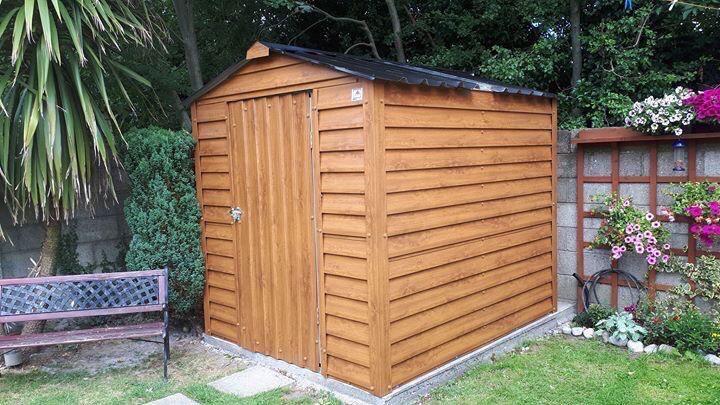
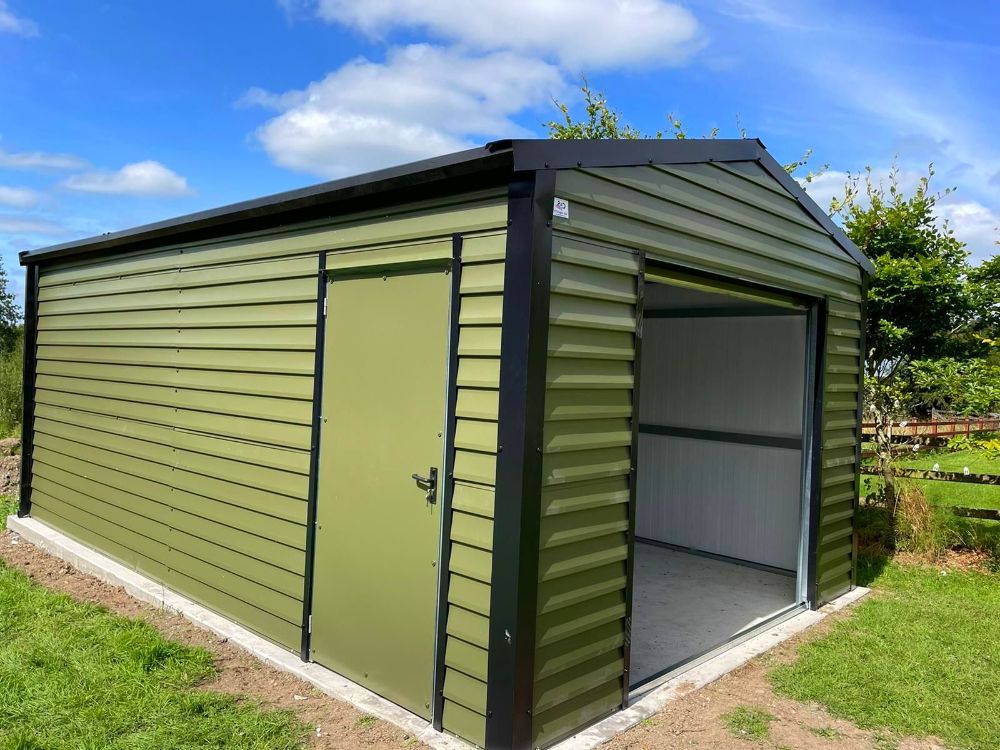
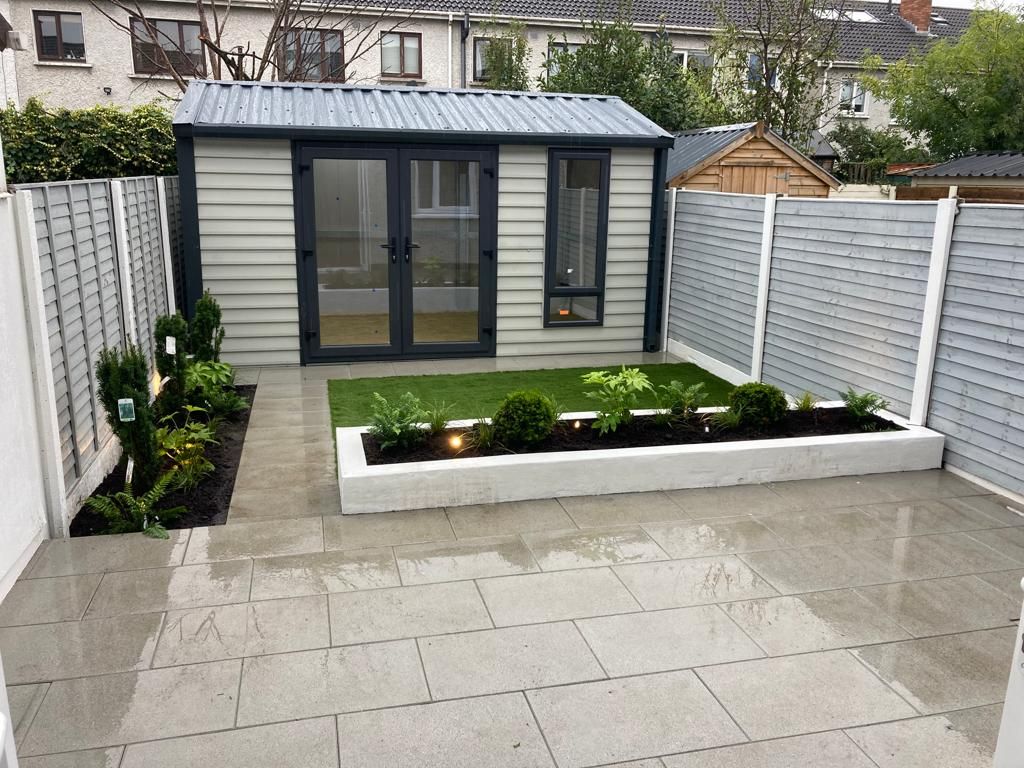
If your current shed leaks, has rotten timber or no longer locks properly, it may be time to consider a replacement. Our steel garden sheds offer a secure, weather-resistant and low-maintenance alternative to timber, designed for Irish weather conditions and supplied in a range of sizes, colours and roof styles. For anyone who wants a more stable environment for tools, equipment or hobbies, we also supply insulated garden sheds.
Getting Your Shed Ready for the Season Ahead
Storing garden equipment properly over winter comes down to a few simple habits: clean and dry every tool, prepare machinery according to its handbook, bring batteries and frost-sensitive products indoors, keep everything off the floor, and make sure the shed itself is dry and secure. Done once in early November, it saves money on repairs and means your tools are ready when the grass starts growing again. For homeowners across Dublin, Kildare, Meath and Wicklow, a well-made steel shed provides a dependable place to keep it all.
If you are thinking about a new steel garden shed before winter sets in, our team can advise on size, colour and base preparation and handle the full installation. Contact ColourTrend Sheds, call us on 01 467 0131 or email sales@colourtrendsheds.ie.