
Preparing a Garden Shed for Winter Storms
16 November 2026
Share
Getting A Garden Shed Ready For Winter Storms
Preparing a garden shed for winter storms means checking its base and anchoring points, securing the roof and doors, and clearing loose items from around it before strong winds arrive. A short autumn check-up like this helps a steel or timber shed in Dublin, Kildare, Meath or Wicklow stay firmly in place through the windiest months.
Below we go through the checks worth making before the stormy season sets in, from the base and fixings to the roof, doors and surrounding garden, along with what to do once a storm warning is issued for your area.
Why Irish Winters Put Pressure On Garden Sheds
Garden sheds in Ireland face a tougher test than most outdoor structures. Between October and February, spells of heavy rain are regularly followed by named storms bringing sustained winds and gusts strong enough to shift unsecured buildings, lift loose roof sheets or strip away door seals that have slowly worn down over the summer.
Homes across Dublin, Kildare, Meath and Wicklow are no strangers to this pattern. Exposed gardens, open sites and properties near the coast or on higher ground tend to feel the worst of it, but even a sheltered back garden can funnel wind around a house or boundary wall in ways that catch a shed side-on. Taking a little time before winter storms arrive is far easier than dealing with a toppled or damaged shed afterwards.
It is also worth remembering that a shed rarely fails because of one single gust. More often, small weaknesses build up over several seasons, such as a slightly loosened anchor bolt, a strip of roof flashing that has started to lift, or a door seal that let in a little more damp each winter. By the time a named storm arrives, those small issues can combine into a much bigger problem, which is why an autumn check before the season's first warning is so useful.
Checking The Base And Anchoring Points
A shed is only as stable as what it sits on, so the base is the right place to start. Walk around the shed and check that it is still sitting level, with no gaps that have opened up between the floor and the base, and no soft or sinking ground at the corners. Water pooling against one side is often an early sign that the base has shifted slightly.
If your shed was installed with ground anchors, tie-down straps or bolted fixings, confirm each one is still tight and free of rust. Anchoring points that were snug when first installed can loosen over time as timber settles or ground conditions change, so a quick check with a spanner or by hand is worth the few minutes it takes. For a closer look at how a proper base supports a shed for the long term, our guide on garden shed foundations and bases covers what a solid, level base should look like.
Metal Versus Timber Fixings
Steel sheds are generally fixed to their base with bolts through the frame, while timber sheds are more often held with straps, brackets or ground pegs. Either way, a shed that is correctly anchored to a solid base is far less likely to shift or lift in a winter storm than one simply resting on paving or soil.
Securing The Roof, Doors And Windows
Once the base is sound, turn your attention upwards. A roof that is not fully secured is one of the most common points of failure during strong winds, so this is worth checking carefully each autumn.
- Check roof sheets, felt or tiles for lifted edges, loose fixings or cracked seams, and have any issues repaired before winter.
- Clear leaves and debris from guttering and roof valleys so rainwater can drain away rather than adding weight or finding its way inside.
- Make sure door hinges, bolts and locks are tight, since a door that bangs in the wind puts repeated strain on its frame.
- Check window and vent seals for gaps, and replace any rubber seals that have become brittle or cracked.
Doors That Open Outwards
Outward-opening doors can act like a sail if caught by a gust while open, so during a storm warning it is worth keeping doors closed and securely bolted rather than propped open, even briefly.
Clearing The Area And Checking Drainage
A tidy, well-drained space around a shed makes a real difference once the wind picks up. Bins, plant pots, garden furniture and tools left leaning against the walls can be blown into the shed, denting panels or cracking timber cladding, while overhanging branches can snap and fall directly onto the roof.
Before the stormy season, move loose items into storage, secure anything that cannot be moved, and trim back any branches that hang close to the shed. It is also worth checking that the ground around the base drains freely, since standing water against the walls or base over a wet Irish winter can lead to rot in timber sheds or corrosion at the base of a steel one. Our piece on planning a secure garden storage shed has further guidance on keeping the area around a shed organised and protected.
A quick walk around the boundary is worth doing at the same time. Loose fence panels, unsecured trellis and garden sheds belonging to neighbours can all become airborne in a bad storm, so flagging anything that looks unstable, even if it is not your own, can prevent damage spreading to your shed, garden or home. Keeping a simple mental note of what needs attention each autumn makes the whole process quicker the following year.
What To Do When A Storm Warning Is Issued
When a named storm or a wind warning is forecast for your county, a short checklist on the day can prevent most storm-related damage:
- Check Met Éireann's current weather warnings for your area so you know how much notice you have.
- Close and bolt all doors, windows and vents, and double-check any padlocks.
- Bring in or tie down anything loose nearby, including bins, furniture and tools.
- Clear guttering one final time if heavy rain is forecast alongside the wind.
- Walk the garden afterwards to check for loose fixings, lifted roofing or shifted anchors once it is safe to do so.
Getting into this habit each time a storm is forecast takes only a few minutes and goes a long way towards protecting whatever you store inside, from tools and bicycles to garden machinery.
Choosing A Shed Built For Irish Weather
Older or poorly fitted sheds are far more likely to suffer storm damage, no matter how carefully they are maintained. If your current shed is showing signs of wear around the doors, roof or base, it may be more practical to replace it than to keep patching it up each winter.
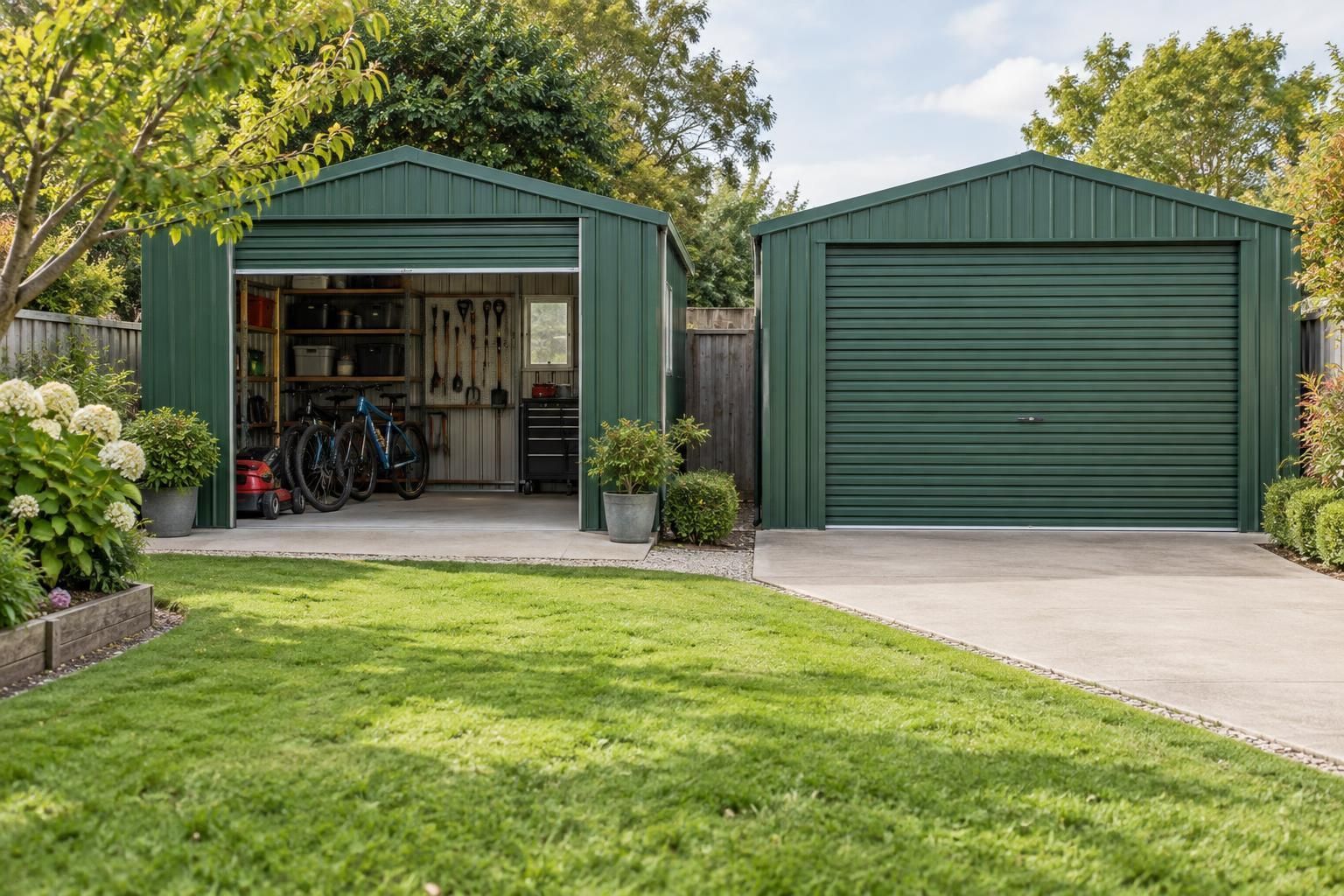
At ColourTrend Sheds, we supply and install steel garden sheds designed to cope with Irish weather, along with insulated sheds for anyone storing items that are sensitive to damp or cold. Every shed we fit is properly based and anchored on-site, which gives it a much better chance of handling winter storms than a shed that has simply been placed on uneven or unprepared ground.
For households across Dublin, Kildare, Meath and Wicklow, a well-fitted steel shed with solid anchoring tends to need far less attention each winter than an older timber shed that has begun to twist, swell or pull away from its fixings. If storm damage has already left your current shed leaning, cracked or letting in water, it is often more cost-effective in the long run to replace it with one built and installed to handle local conditions from the start.
Preparing a garden shed for winter storms is mostly a matter of checking the base, roof, doors and surrounding area each autumn, then acting quickly once a warning is issued for Dublin, Kildare, Meath or Wicklow. A little attention now can save a lot of disruption once the winds pick up.
If you would like advice on strengthening an existing shed or want to discuss a new, properly anchored steel or insulated shed for your garden, get in touch with our team. You can reach us on 01 467 0131 or by email at sales@colourtrendsheds.ie.
Recent Posts

Getting A Garden Shed Ready For Winter Storms
Preparing a garden shed for winter storms means checking its base and anchoring points, securing the roof and doors, and clearing loose items from around it before strong winds arrive. A short autumn check-up like this helps a steel or timber shed in Dublin, Kildare, Meath or Wicklow stay firmly in place through the windiest months.
Below we go through the checks worth making before the stormy season sets in, from the base and fixings to the roof, doors and surrounding garden, along with what to do once a storm warning is issued for your area.
Why Irish Winters Put Pressure On Garden Sheds
Garden sheds in Ireland face a tougher test than most outdoor structures. Between October and February, spells of heavy rain are regularly followed by named storms bringing sustained winds and gusts strong enough to shift unsecured buildings, lift loose roof sheets or strip away door seals that have slowly worn down over the summer.
Homes across Dublin, Kildare, Meath and Wicklow are no strangers to this pattern. Exposed gardens, open sites and properties near the coast or on higher ground tend to feel the worst of it, but even a sheltered back garden can funnel wind around a house or boundary wall in ways that catch a shed side-on. Taking a little time before winter storms arrive is far easier than dealing with a toppled or damaged shed afterwards.
It is also worth remembering that a shed rarely fails because of one single gust. More often, small weaknesses build up over several seasons, such as a slightly loosened anchor bolt, a strip of roof flashing that has started to lift, or a door seal that let in a little more damp each winter. By the time a named storm arrives, those small issues can combine into a much bigger problem, which is why an autumn check before the season's first warning is so useful.
Checking The Base And Anchoring Points
A shed is only as stable as what it sits on, so the base is the right place to start. Walk around the shed and check that it is still sitting level, with no gaps that have opened up between the floor and the base, and no soft or sinking ground at the corners. Water pooling against one side is often an early sign that the base has shifted slightly.
If your shed was installed with ground anchors, tie-down straps or bolted fixings, confirm each one is still tight and free of rust. Anchoring points that were snug when first installed can loosen over time as timber settles or ground conditions change, so a quick check with a spanner or by hand is worth the few minutes it takes. For a closer look at how a proper base supports a shed for the long term, our guide on garden shed foundations and bases covers what a solid, level base should look like.
Metal Versus Timber Fixings
Steel sheds are generally fixed to their base with bolts through the frame, while timber sheds are more often held with straps, brackets or ground pegs. Either way, a shed that is correctly anchored to a solid base is far less likely to shift or lift in a winter storm than one simply resting on paving or soil.
Securing The Roof, Doors And Windows
Once the base is sound, turn your attention upwards. A roof that is not fully secured is one of the most common points of failure during strong winds, so this is worth checking carefully each autumn.
- Check roof sheets, felt or tiles for lifted edges, loose fixings or cracked seams, and have any issues repaired before winter.
- Clear leaves and debris from guttering and roof valleys so rainwater can drain away rather than adding weight or finding its way inside.
- Make sure door hinges, bolts and locks are tight, since a door that bangs in the wind puts repeated strain on its frame.
- Check window and vent seals for gaps, and replace any rubber seals that have become brittle or cracked.
Doors That Open Outwards
Outward-opening doors can act like a sail if caught by a gust while open, so during a storm warning it is worth keeping doors closed and securely bolted rather than propped open, even briefly.
Clearing The Area And Checking Drainage
A tidy, well-drained space around a shed makes a real difference once the wind picks up. Bins, plant pots, garden furniture and tools left leaning against the walls can be blown into the shed, denting panels or cracking timber cladding, while overhanging branches can snap and fall directly onto the roof.
Before the stormy season, move loose items into storage, secure anything that cannot be moved, and trim back any branches that hang close to the shed. It is also worth checking that the ground around the base drains freely, since standing water against the walls or base over a wet Irish winter can lead to rot in timber sheds or corrosion at the base of a steel one. Our piece on planning a secure garden storage shed has further guidance on keeping the area around a shed organised and protected.
A quick walk around the boundary is worth doing at the same time. Loose fence panels, unsecured trellis and garden sheds belonging to neighbours can all become airborne in a bad storm, so flagging anything that looks unstable, even if it is not your own, can prevent damage spreading to your shed, garden or home. Keeping a simple mental note of what needs attention each autumn makes the whole process quicker the following year.
What To Do When A Storm Warning Is Issued
When a named storm or a wind warning is forecast for your county, a short checklist on the day can prevent most storm-related damage:
- Check Met Éireann's current weather warnings for your area so you know how much notice you have.
- Close and bolt all doors, windows and vents, and double-check any padlocks.
- Bring in or tie down anything loose nearby, including bins, furniture and tools.
- Clear guttering one final time if heavy rain is forecast alongside the wind.
- Walk the garden afterwards to check for loose fixings, lifted roofing or shifted anchors once it is safe to do so.
Getting into this habit each time a storm is forecast takes only a few minutes and goes a long way towards protecting whatever you store inside, from tools and bicycles to garden machinery.
Choosing A Shed Built For Irish Weather
Older or poorly fitted sheds are far more likely to suffer storm damage, no matter how carefully they are maintained. If your current shed is showing signs of wear around the doors, roof or base, it may be more practical to replace it than to keep patching it up each winter.
At ColourTrend Sheds, we supply and install steel garden sheds designed to cope with Irish weather, along with insulated sheds for anyone storing items that are sensitive to damp or cold. Every shed we fit is properly based and anchored on-site, which gives it a much better chance of handling winter storms than a shed that has simply been placed on uneven or unprepared ground.
For households across Dublin, Kildare, Meath and Wicklow, a well-fitted steel shed with solid anchoring tends to need far less attention each winter than an older timber shed that has begun to twist, swell or pull away from its fixings. If storm damage has already left your current shed leaning, cracked or letting in water, it is often more cost-effective in the long run to replace it with one built and installed to handle local conditions from the start.
Preparing a garden shed for winter storms is mostly a matter of checking the base, roof, doors and surrounding area each autumn, then acting quickly once a warning is issued for Dublin, Kildare, Meath or Wicklow. A little attention now can save a lot of disruption once the winds pick up.
If you would like advice on strengthening an existing shed or want to discuss a new, properly anchored steel or insulated shed for your garden, get in touch with our team. You can reach us on 01 467 0131 or by email at sales@colourtrendsheds.ie.
